Monday, May 17, 2010

Somali Piracy


A BBC map of the pirate attacks

What and Where


Piracy in Somalia is a very serious issue. Modern, armed, and dangerous pirates are attacking ships off the coast of Somalia. Somalia is an African country on the Horn of Africa. This is the peninsula on the northwestern part of Africa that has the Red Sea to the north and the Indian ocean to the west. The Red Sea leads into the Bab el Mandeb strait and into the Gulf of Aden. The Red Sea's Suez Canal is probably the most important shipping passage in the entire world. Many ships pass through this every day, down the Red Sea and into the Gulf of Aden. This gulf is north of Somalia and is full of ships laden with billions of dollars. The pirates are simple criminals who use small boats and automatic weapons to attack the much slower unarmed vessels in the area. These pirates will steal the ship, any cargo, and take hostages. An example is here of how the pirates just recently took a Greek ship. They will hold the crew hostage until paid off and the same with the ship. Sometimes, they will sell the cargo, but every single case is different and each is unique. On some occasions no prisoners will be taken and only cargo taken. All in all, the pirates are acting as thieves out on the waters off east Africa.


A Somali Pirate vessel


Why and How?


To understand why the pirates are pestering shipping, one must look into the history of Somalia and how it impacted these people. Somalia does not have a strong central government and cannot this leads to the country not being able to stand up for its borders. People on the coast depended on fishing for a livelihood. Foreign compeitors from Yemen and other countries attempted to take away and over run the Somali fishing industry. The original "pirates" were there to take back their waters. Somalia is dominated by civil war and warlords who, to add an extra area of revenue, invest in piracy as a profitable means to make some cash. To the poverty stricken people of the area, piracy is a very attractive option. There is action, money, foreign goods, and guns. It attracts many young men and has brought money (and illicit activities) to the area. All the piracy, according to multiple source including the BBC, is from illegal fishing.But how do these pirates manage to attack these ships? Many of their weapons come from Yemen, across the Gulf of Aden, and from the capitol. The pirates started off as a small, local groups led to masses of armed men coming from all over Somalia to make a profitable living at the expense of innocent vessels. The pirates have some strategies as well. If attacking a small ship (such as a pleasure yacht) they will hide out of sight and in the dark sneak up and capture the crew, then steal away. Sometimes the pirates will also pretend to be friendly and then turn hostile. When targeting larger freighters, the pirates sometimes will attack the ship with small arms fire and shoot RPGs into the sides and then use their small, power boats to board the ship. Once they steal the vessel they will change the ships name, registration number, and logbooks and sell it. Often however, they will hold the entire crew and ship for ransom.

Effects

The effects of Somali piracy are obvious. Somali pirates take in, on average, two million US dollars per ship taken. To an incredibly poor African nation, that sum is an absolute ton. An average Somali family makes $500 (not involved in piracy). The Somali who funded the attack could make $500,000 and the pirates themselves can make up to $20,000 is the ship is ransomed off at a high price. The Somali person engaged in piracy is making much more than normal and can afford to have a better life. On the flip side, the global economic community suffers. Businesses all over Europe and Asia pay to send cargo through the strait and when this cargo is taken or held for ransom, more money is lost. Insurance rates on ships have risen in recent years, sometimes costing up to $20,000 extra than previous costs. The pirates have raised global concern to the area and now insurance companies are careful about insuring ships that go into the area since the chance to lose huge sums of money is very high. Also, costs for anti piracy equipment (discussed in the proceeding paragraph) can be very high as well. Not everything is about the cost. People are involved and as is the case with any illegal activity, the chance that lives might be lost, or wounded is high. Piracy disrupts aid to Somalia and people who are not involved in piracy feel the effects of not getting the food and other relief efforts.


Attempts to Fight the Pirates

There are multiple layers in which the pirates are being combated. The first level is actual ship defense. Shiping companies are hiring former Navy Seals and other military personel to work on freighters that could help in the event of pirate attack. technology has also aided how the ships can defend against the pirates. Ships now are being armed with "sonic cannons" which fire unharmful, extremely loud noises at priates as weapons. Also, a strange new device is one that fires bowel movement inducing waves that obviously will dissuade attackers. Another popular device is simple fire hoses that are high powered enough to blast attackers with high powered water. Fire hoses have long been used wheras the other devices have had only limited use and success. Cargo freighters and other compainies are now hiring ex Navy SEALs who are trained in small arms usage to fight the pirates. The only problem with this is when the pirates do board they will likely take revenge and kill the crew. The Global Mairtime Transportation School has a large list of anti piracy methods, all of which are nonlethal. The Dazzle gun (pictured above) is meant to discombobulate the attacker and hopefully repel them. Many devices are currently under development to combat teh pirates and most are not meant to kill. The problem is that for ships to be armed heavily is a tricky business of certification and no the vessels can be considered of having a double purpose of a business freighter and an armed combat vessel.


The Arest of Some Pirates


International Efforts and What Else Can Be Done


Many countries are sending aid to the area in form of ships of the military nature. Russia, who needs resources from its Eastern shores sends ships from the West to the East via the Gulf of Aden, has already sent a destroyer to combat and escort ships in the area. The situation in Somali is a perfect example of how many nations can work together. Korea, Russia, the US, the EU, and China have all combined ships with a common goal of fighting the pirates in the area. This seems like a good strategy but it has its flaws. Pirate attacks are often upon those vessels who are NOT defended. Pirates use small boats and in truth these ships are hard to attack with giant destroyers. Perhaps there are more ways to combat the piracy from the inside? If the Somali can be shown that piracy is not a good way to eliminate their problems, then the attacks would decrease. The pirates often hold off food relief supplies to the area, but with increased aid to the entire region (Kenya, Ethiopia) people in Somalia would have to rely less on relief delivered via the sea. The stabilization of the country is also of vital importance. With a strong central government who would actually look out the welfarefare of its people, people would be less likely to go into illicit activities. All in all, if the government of Somali was restored to some stability and the fishing restored to the people of Somalia, the problem of priacy would be attacked at the base and less men would become involved in the first place.

I have learned that leaders in many nations of the world face complex problems that they feel cannot be solved without international action


It is almost impossible to go through life without associating with other people. We solve our problems with help from our teachers, parents, and friends. Just like people, countries rely upon other nations and organizations to help solve problems that arise in their nations. Many issues arise and I will only discuss some important ones that involve many organizations and countries. the war against poverty is an example of huge multinational cooperation. The UN leading the fight against poverty, but it takes commitment from all nations in the UN for such a campaign to happen. Large, rich countries must be willing to give cash to aid those nations where poverty is prominent. Those nations receiving help must be sure to use it in a good way and to make sure those who need the relief actually get it. Many countries are involved in attempting to solve a simple problem, fight poverty. Many layers of poverty exist and each case in each country is different. But, with extra help, like the UN Millennium Project poverty can be fought. Pollution of the seas is another international issue. International laws exist that prevent dumping into the sea but many countries turn a blind eye to such matters. Of course, oil pollution in the seas in an aspect that is of the utmost concern. The recent spill in the Gulf of Mexico has set many countries awareness levels to the top since they do not want such a crisis to occur in their waters and do not wish to see the current spill effecting too much. An issue that needs more addressing is nuclear weapons. The US has taken a stand against nuclear development programs in certain countries, yet retains many of its own nukes. International cooperation is needed to help disarm many of these nukes, especially between Russia and the USA. The US currently has 200 nuclear weapons in Europe. This is crippling since it shows a bad example of nonproliferation actions if we still have 200 nukes in Europe alone. Nonproliferation is a large issue that effects many nations and more international meetings are needed to further combat nuclear armament. Of course, leading the international cooperation efforts is the United Nations. The UN is the best hope that we have a unified world through cooperation. Our leaders have learned to cooperate with each other and we are beginning to see that we need each other more and more in this global age.

Nuclear Proliferation

Wednesday, May 12, 2010

I Understand How Our Knowledge of the Past is Constructed through Analysis of Primary Sources


A primary source is a document that existed at the time period with which one is studying. A painting of the 1850s drawn in the 1850s is an example of a a primary source. Primary sources are the most reliable way we can learn about a time period. A primary source is one that has not been contaminated by modern opinion. We get a clear picture of how life was during that time period. If one reads the journal of say, Julius Caesar's conquest of Gaul, we get an idea exactly what occurred and how it happened. Primary sources give one an exact idea of what happened. Through a primary source we also gain introspective into how a person in that time period thought and since our thoughts have changed since then we gain knowledge of the thoughts of people of that time.


Museum


This poster is one of many advertising Buffalo Bill's Wild West Show. This show highlighted "wild west" attractions from rifle shooting tricks to band music popular in saloons. This poster also shows another popular aspect of the show, its riders on horseback performing tricks that the cowboys knew. Indians were also added into the show and their culture showcased as well. This shows how the United States conquered the west and life during the New Imperialism was affected by many new trades and exports coming out of the Western United States. One of those exports was the stories of the cowboys and Indians. The United States gained more power and more land when it pushed natives out of their lands and sent more settlers into the wild west. This poster helps show how western culture had spread, even to the broad expanse of the western United States. This source for this picture is a credible one. It comes from the Buffalo Bill Historical Center in Cody, WY. I myself have been to this museum twice in my personal travels and actually remember seeing this and other posters. The museum has many collections from Plains Indians to a firearm section.


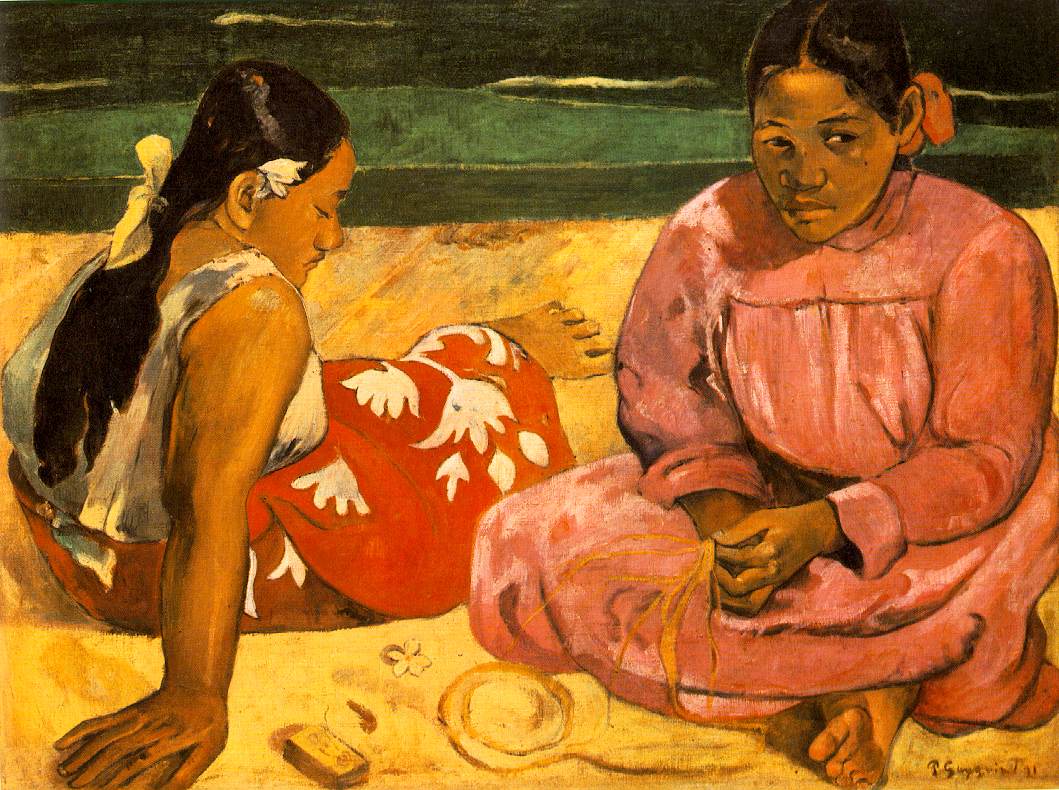
Femmes de Tahiti by Paul Gaugin


This is a painting by the Post-Impressionist Paul Gaugin. It is of two Tahitian women on a beach. Paul Gaugin was a painter who was once the head of the Postimpressionistic movement in France, but the movement of Postimpressionism was unpopular with the bourgeois and he decided to go Tahiti. Paul considered the land a place of unspoiled beauty and he painted a series of paintings there. This is an excellent example of how the New Imperialism effected life. Before the western powers felt the urge to conquer and explore the globe, places like Tahiti were far off the beaten track and hardly any Westerners had travelled to these places. They had not travelled there because there was no type of civilization that they were familiar with. France owned Tahiti in the very early 1900s and therefore Frenchmen, like Gaugin, could visit and explore the beauty of those foreign cultures. The source is reliable as it is a webmuseum of Paris and showcases many works by French and other painters.


This is a picture of the officers of the Rattrays Sikh. Rattrays refers to soldiers and Sikh is a religion which is mostly centered in the Punjab region of India. These were the officers who led a battalion commissioned by the British Indian government to police an area in the Lower Providences of Bengal that was currently revolting. The battalion is still very much in existence today and serves the Indian government. This picture depicts the members in their dress uniform, which in and of itself is an example of the New Imperialism. Britain conquered India and made it a colony called the British Raj (governing power of India or the actual name of the British occupied country). Life in India was radically changed with new British ideas flowing into the country. Efforts to modernize, throw off former systems of government, and embrace new technologies dominated how Indians thought. India as a country started to get nationalistic thoughts during this British occupation and eventually led to Gandhi and the formation of modern India. On the flip side, Britain gained many things Indian from their occupation. Britain received more exposure to tea (such a characteristic of British culture today!), curry, spices, cotton, and silk. The British Empire loved its Indian providence for its natural resources and human manpower, and trade between the two nations led to globalization for the entire region of southeast Asia. the source is from a site about the regiment's history and has many pictures of the regiment through its long existence.

This is a picture of Winston Churchill examining a Lee-Enfield rifle.

The artifact I have chosen is the famous Lee-Enfield rifle. The gun was developed in 1888 and is considered to be one of the most famous guns ever made. The Enfield was an incredibly reliable gun and the British army used it during both World Wars and prior to those engagements. The gun uses a "cock-on-closing" bolt and has the capacity for ten rounds in its magazine. The gun had quick firing capabilities and a fairly large magazine compared to muzzle loader or single shot breech firing gun of the time. The British certainly took advantage of superior weaponry at the time with all of its army's soldiers carrying this gun. The New Imperialism was directly impacted by developments of weaponry, like the Lee-Enfield rifle since this allowed the British to take advantage of superior weaponry. No native would have access to high technology like a multiple round firing weapon. This gun helped the normal foot soldier fight his way to British power. powerful weapons like the Maxim gun were also developed but they helped regiments as a whole and not the individual foot soldier. To a normal man, a better gun could be a godsend in many a dire situations. The gun also stood the test of time and was so advanced for the 1880s that it stayed in use by the British military until 1957. The picture is from the show "How Stuff Works" and the information from a website of Lee-Enfield enthusiasts.


Monday, May 10, 2010

I Become More Knowledgeable About the World


Current Events

One issue I learned about this year was the problems of the Lord's Revolutionary Army located in Uganda and Sudan. The situation there is not a pleasant one, especially to the ears of a first world country like the USA where we enjoy many benefits of modern society. The LRA was established by a man named Joseph Kony. Kony leads the movement and believes he is a good Christian and his movement is just. The LRA is far from a noble cause. Figures say that between 20,000 and 30,000 children have been abducted by this army to be used as child warriors or even sex slaves.The threat of abduction has lead to many, many people being displaced and children are forced to even flee to hospitals every night to hide. The LRA has troubled the entire region in Uganda and torments the inhabitants with their fighting and needless bloodshed. Currently Kony is still on the run. The New York Times recently gave information stating that the Ugandan army was using former child soldiers to hunt down their former tormentor. Hopefully, this new strategy will bring Kony to justice and pay for the countless amounts of people who have had their lives ruined by his actions.


The Haber-Bosch Process

History of the 20th Century


The 20th century started out with a slew of new inventions and the world became even more deeply rooted in industry. Inventions such as the airplane, car, and more importantly to our health, the development of the Haber-Bosch ammonia synthesis process. This process shaped the way to allow for more fertilizers that would feed our growing world into the first world war and the following one. After WWI self-determination would create the desire for groups of people to create their own countries and nations. This concept obviously impacts our world today, look at a map of Africa with its many nations. Three types of government; democracy, communism, and fascism all vied for power in postwar Europe. The Great Depression created turmoil on the industrialized world and there was a great sense of uncertainty. Unfortunately, WWI led to a second world war, this one being just as deadly as the first. After the war, western Europeans lost power in places like Africa and with the thoughts of self-determination, many countries formed. Technology has rapidly advanced and allowed many things from incredible medicines to horrible nuclear weapons. Civil rights in the past 50 years have increased to allow universal suffrage in many countries and most countries are now trying to modernize after shaking off old world ties and attempts at communism. The United Nations is one example of a postwar organization that is helping bring the rest of the world to the same page as wealthy nations like the United States.


Racism has no basis in genetics.


Human Diversity


In this semester we learned about the term "Race." In actuality there are no races of people. genetically we are all the same and the concept of race is in and of itself, skewed. A common example of a characteristic which we identify as race is one's skin color. In actuality, there are no differences between a person with dark skin or light colored skin. The person with darker skin has merely spent more time out in the sun whereas the other, lighter, person has not. It has been genetically shown that we are all genetically 99.9% the same. The concept of race justified social inequalities as normal, natural things. That misconception of race has led to the problems of racism faced in the world today, when we all know that humans, are all simply, humans.


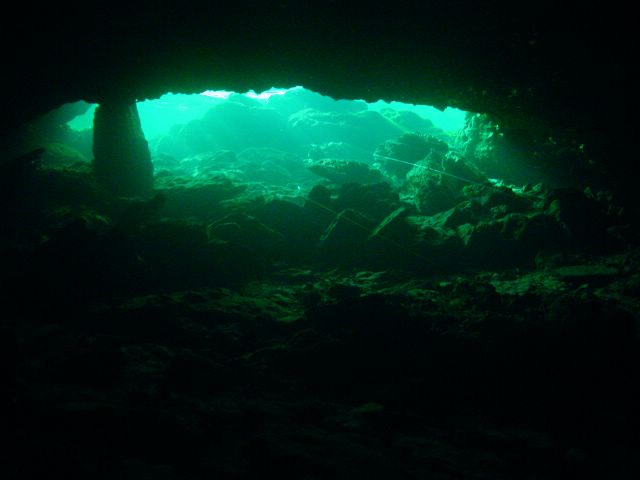
The Blue Hole, New Mexico


Places on the Earth


Certain areas of this earth are truly different than the rest of the world. Sure, every little acre of land is unique compared to the last, but some places defy the stretches of human imagination. Places like Mt. Everest, the Great Coral Reef, and the Victoria Falls change the human perspective on the wide world in which we live. These extremes of nature beg us to explore them, to conquer them. No greater example of this urge to conquer the wild is that of the Mt. Everest climbers. These brave men and women go against the hellish frozen conditions to scale the mountain to say they were on top of the world. Many die, and many lose limbs to the freezing cold winds and conditions. Everest is unique and so are all the mountains in the Himalayans. The Himalayans are ironic in their natural wonder and beauty but if ventured into by an unknowing soul, can seem very deadly. The south pole has also drawn the allure of many an adventurer. Roald Amundsen was the first person to reach it in1911. The poles are an example of one of Earth's extreme places that fascinates the human imagination to explore them. Many places on earth are not as well known, yet are equally beautiful and inspire the human urge to explore. Places like The Blue Hole in Santa Rosa, New Mexico and the lush dense trees of the southern Oregon tropical forests. The Earth is home to a whole slew of fascinating places and the more one travels the more one discovers them.


The world has many cultures

Cultures of the World's Societies


As I have come to realize, the cultures of the world are truly something to rejoice in. If all humans held the same series of beliefs and norms we would have a dull world. This year I have further increased my knowledge of the many peoples who inhabit this earth. I studied Somalia and learned of a people used to conflict but still keep their unique culture alive. this crosscoads of the world place lead to an example of how many cultures fuse into one beautiful mixture. The Somali have an African like climate and appearance, a middle eastern set of values/ religion, and even a mix of Indian and Southern Asia foods and spices. I have realized that each culture begs for my knowledge and intrigue.Through the course of the year, i have compared Scotland to India and how cultures are different but all boil down to one thing, the human element in the. Culture is a way of life for a group of people and instead of stereotyping one culture to every person in that society one can observe how a culture is fitted into one person's life. An example? Look at American and European regards to marriage. A couple must love one another and go through courtship, dating, etc... We accept this as a nor. In India or Afghanistan marriages are often arranged, not to say that this is wrong simply a way of life. American marriages have a high divorce rate but arranged marriages often do not. All in all, one can see that little cultural differences are what makes people and the world unique. Japan's concept of politeness and gentility is quite different than ours. To close one's eyes in Japan is to be thinking, not sleeping. Cultre is something to embrace and love, to explore and delve into. Culture is what makes us unique.


Tuesday, May 4, 2010

Uganda


The situation in Uganda is certainly improving. I find it inspiring that the Ugandan army is becoming stronger as of late. The Commander Makasi who was so brutal to others has now turned away from his former role and adpoted one that is determined to get the LRA's leader, Joseph Kony. The man is very sneeky, especially in the way in which he is know to avoid capture. Kony would walk backward or use otehr hiding tricks in the bush to stay alive. It is important for this man, who has captured many innocent children and abused so many rights, to be brought to justice. It is unfortunate that peaceful measures could not have been used, but as in many cases, people will not stop terrible evil just beacause it is told to them that it is wrong.